
In fresh, the best tool is still the person who knows

Here comes the sun 🎵
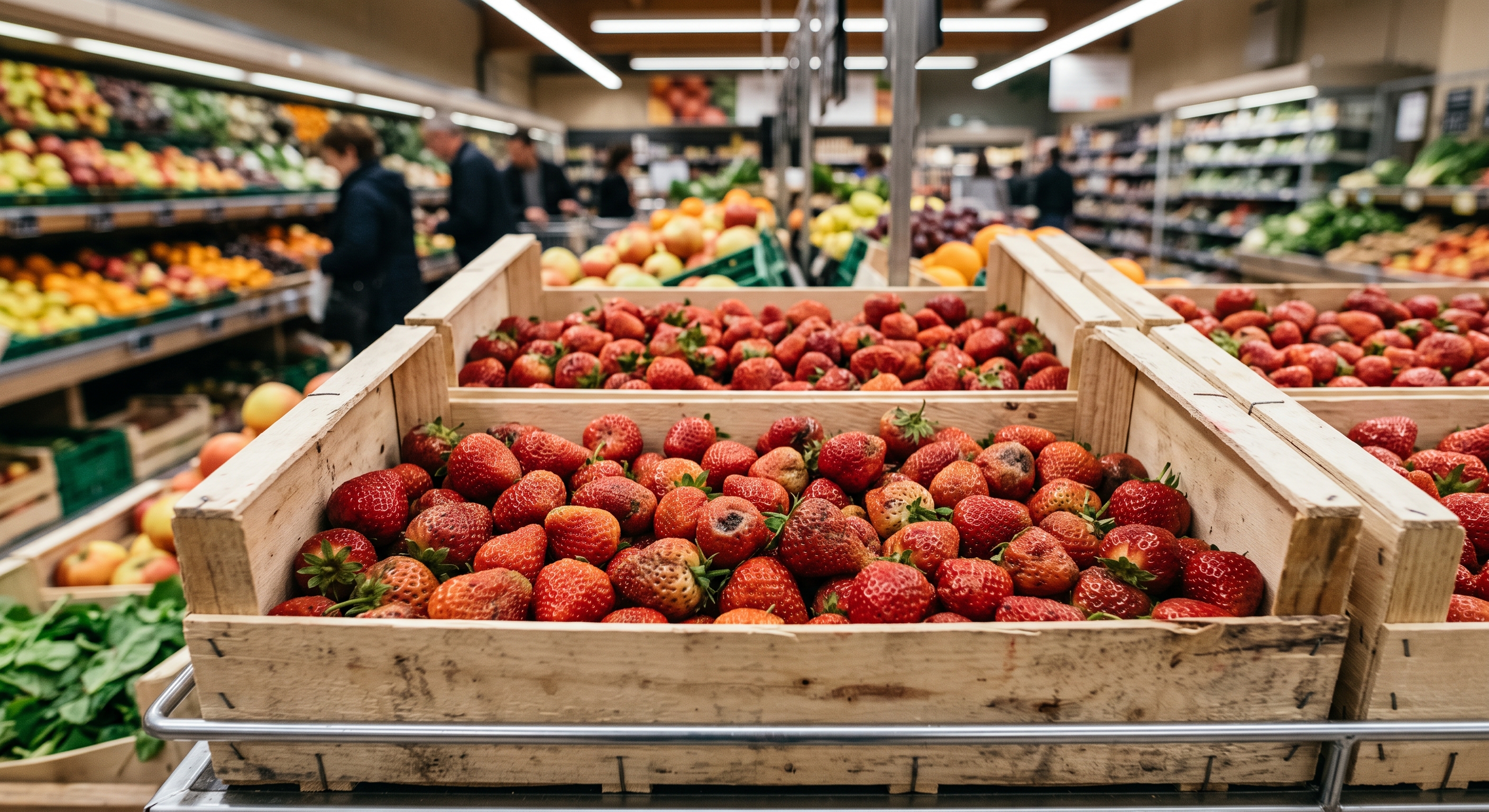
The first morning, the produce department is clean. Rotation has been done, tired product was pulled before opening, and the clamshell of strawberries that was already a little ripe went on markdown at 8:30 a.m. Nothing is left sitting.
The second morning, everything is there too. The same products, the same instructions, the same planogram. But the department doesn't hold the same way. Two or three SKUs are out of stock on the shelf despite cases sitting in the backroom, a crate of radishes with yellowing leaves is waiting to be dealt with, and it will be dealt with too late.
What changed between the two mornings isn't the plan. It's who was on shift.
The real asset in fresh isn't the procedure
In a store, a lot of things run on written rules. Prices, ranges, product displays, opening hours. You can document them, audit them, enforce them.
Fresh works differently. A good fresh department doesn't run on a procedure, it runs on a read. Knowing by eye that a melon will be overripe tomorrow. Sensing that a cut of meat won't make it through the day. Deciding to mark down now rather than tonight, because Saturday traffic isn't Tuesday traffic. Choosing between filling the shelf space and avoiding shrink, with two hours to work with and a delivery running late.
None of these decisions is written down anywhere. They get made dozens of times a day, often in a few seconds, and they're what separates a department that makes people want to buy from a department that costs money.
That's know-how. It's built through repetition, it's passed on by walking the floor next to someone, and it lives in the heads of your best people.
And that's exactly what a store holds onto least well
This is where the industry has a problem, and it's documented.
French grocery retail has roughly 60,000 open positions, on a workforce of nearly 665,000 employees. Turnover in the sector runs around 30%, and hiring needs in food retail are estimated at 130,000 positions a year. On the employer side, France Travail's 2026 labor needs survey (Besoins en main-d'œuvre) counts 264,000 planned hires in retail and distribution, 36% of them rated hard to fill.
We usually read these numbers as a recruiting problem. They also describe something else: a continuous leak of competence.
When a fresh department manager leaves, it isn't a position that empties out. It's a library closing. Nobody wrote down what he knew, because nobody really knows how to write it down. His successor will pick up the same tools, the same assortment, the same instructions, and will take months to get back to the same level. Sometimes he won't get there, because he'll leave first.
The trade publication Je bosse en grande distribution reported in early August a figure that should give any executive committee pause: a department manager reportedly spends about 60% of his working time absorbing the effects of turnover. Recruiting, onboarding, re-explaining, plugging holes. What's left is the time he actually spends on his department.
When the know-how isn't there, you see it and you pay for it
Fresh is the department where the customer judges the banner. It's also where a mistake costs you fastest, because the product doesn't forgive delay.
The French observatory on food price and margin formation (Observatoire de la formation des prix et des marges des produits alimentaires) shows it department by department. For fiscal 2023, butchery comes in at -4.0% net margin before corporate income tax allocation, bakery at -4.8%, seafood at -8.7%. Produce, comfortable for years, has fallen back to +1.3% after several years above 4%.
In other words: across part of fresh, net margin is structurally negative, and across the rest it has gotten so thin that day-to-day execution quality is the difference between breaking even and losing money.
The study published in December 2025 by FranceAgriMer and Interfel, conducted by Ceresco with INRAE, points the same way. About 30% of fruits and vegetables leave the fresh chain across the entire supply chain. Part of that is redirected to other food uses, but at the retail stage the study explicitly names the product's initial quality and certain department management practices among the causes.
Department management. Meaning gestures, trade-offs, decisions made by someone, one morning, in an aisle.
The right question isn't the one we usually ask
Faced with these numbers, the reflex is to recruit faster, retain better, pay a little more. All of that helps. None of it addresses the root.
Because the problem isn't only how many people are on staff. It's that fresh performance today rests on a tacit skill the company doesn't own. It rents that skill, employee by employee, and loses it again with every departure.
So the question worth putting in front of an executive committee is this one: is the know-how in our fresh departments a company asset, or a personal asset belonging to the people who hold it?
If it's a company asset, it should survive the departure of the person who holds it. Today, in the vast majority of stores, it doesn't. The department's standard still depends on who walks through the door at 5 a.m.
This isn't a criticism aimed at the teams. It's the opposite: it's recognition of what they carry, alone, and what nobody has ever helped them carry.
What we're doing about it
We've been working on this question for a while. Not in theory: in the departments, with fresh teams, in several countries.
We're not ready yet to say what we've drawn from it. We will be soon, and we'll show it for the first time at NRF Europe, September 15-17 in Paris.
Until then, there's one thing to do if this resonates: sign up to be among the first to know.
Sources: Je bosse en grande distribution, "Grande distribution: pourquoi 60 000 postes restent vacants," August 4, 2026 · France Travail, Besoins en main-d'œuvre 2026 survey · Observatoire de la formation des prix et des marges des produits alimentaires (FranceAgriMer), wholesale and grocery retail section, 2025 edition, 2023 data · FranceAgriMer and Interfel, "Les pertes dans la filière fruits et légumes et le gaspillage alimentaire," Ceresco and INRAE study, December 2025.